
Climate
Diversion is one of the faster climate actions a city can take. Every tonne that never reaches a landfill is methane that never forms.
Apong molasses · on sale now
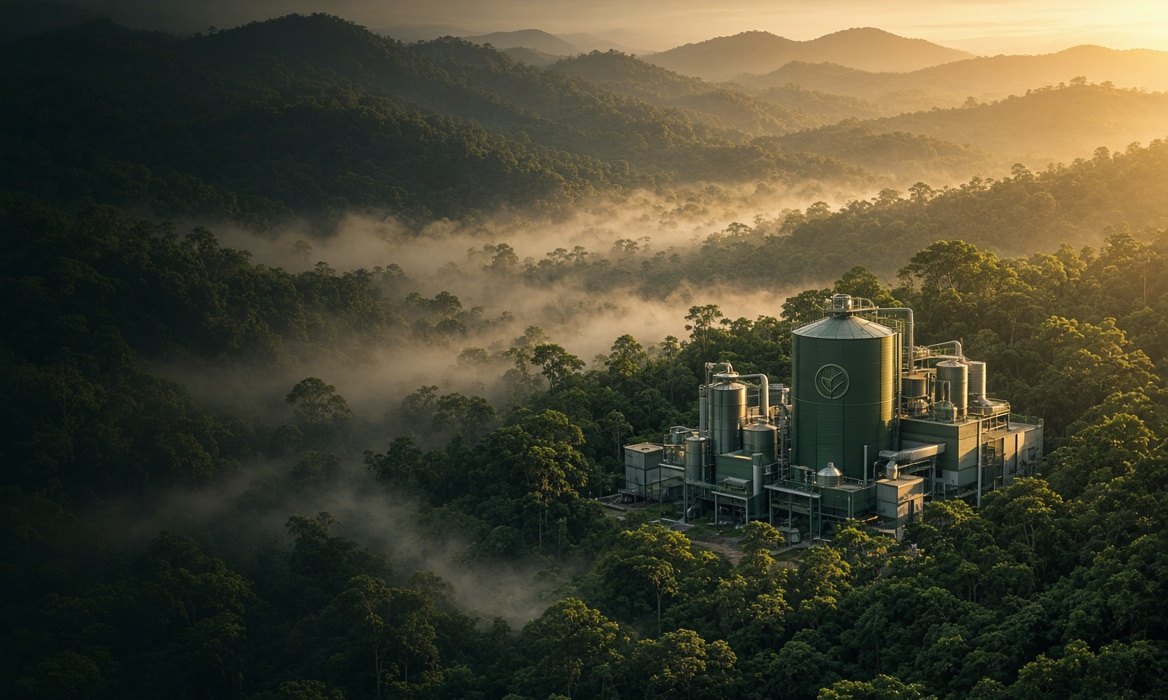
Eco Doliya is not in production. No investment has arrived, so there is no facility. What we sell today is Apong molasses — a soil conditioner for farms, and a household treatment that takes the odor out of food waste.
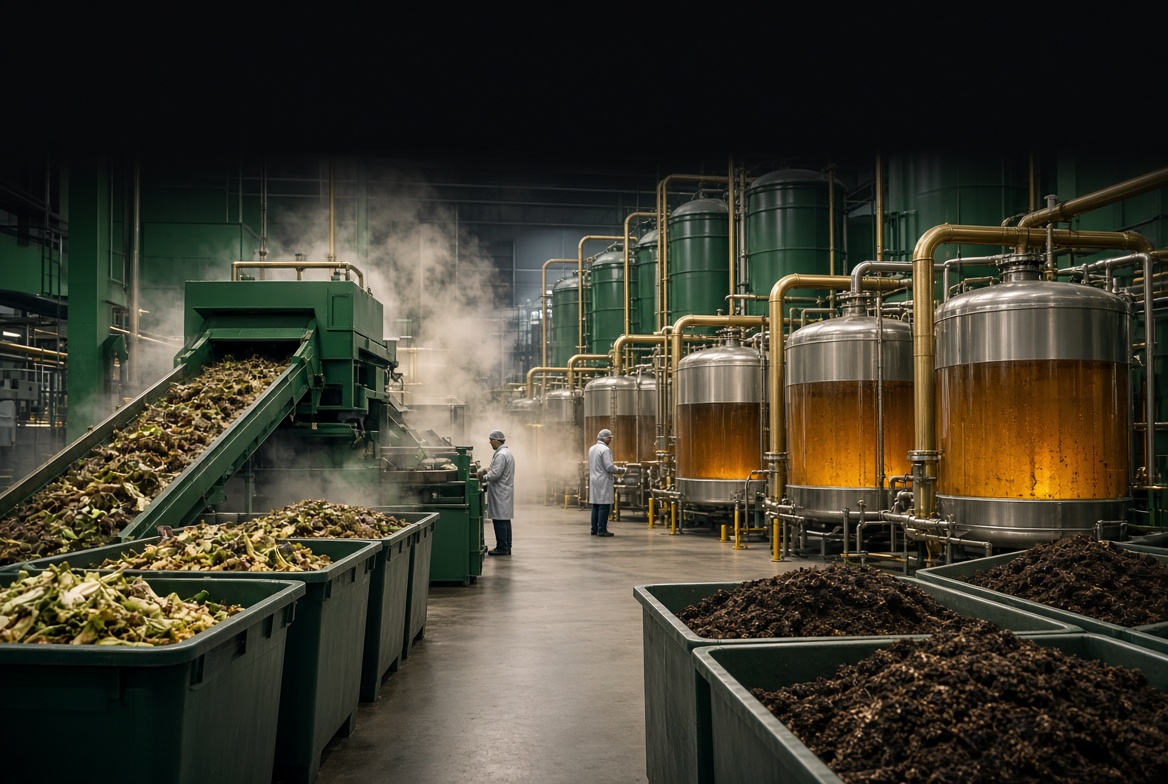
The picture is a vision of Plant 1. It is not a site we operate. None has been built.
The product
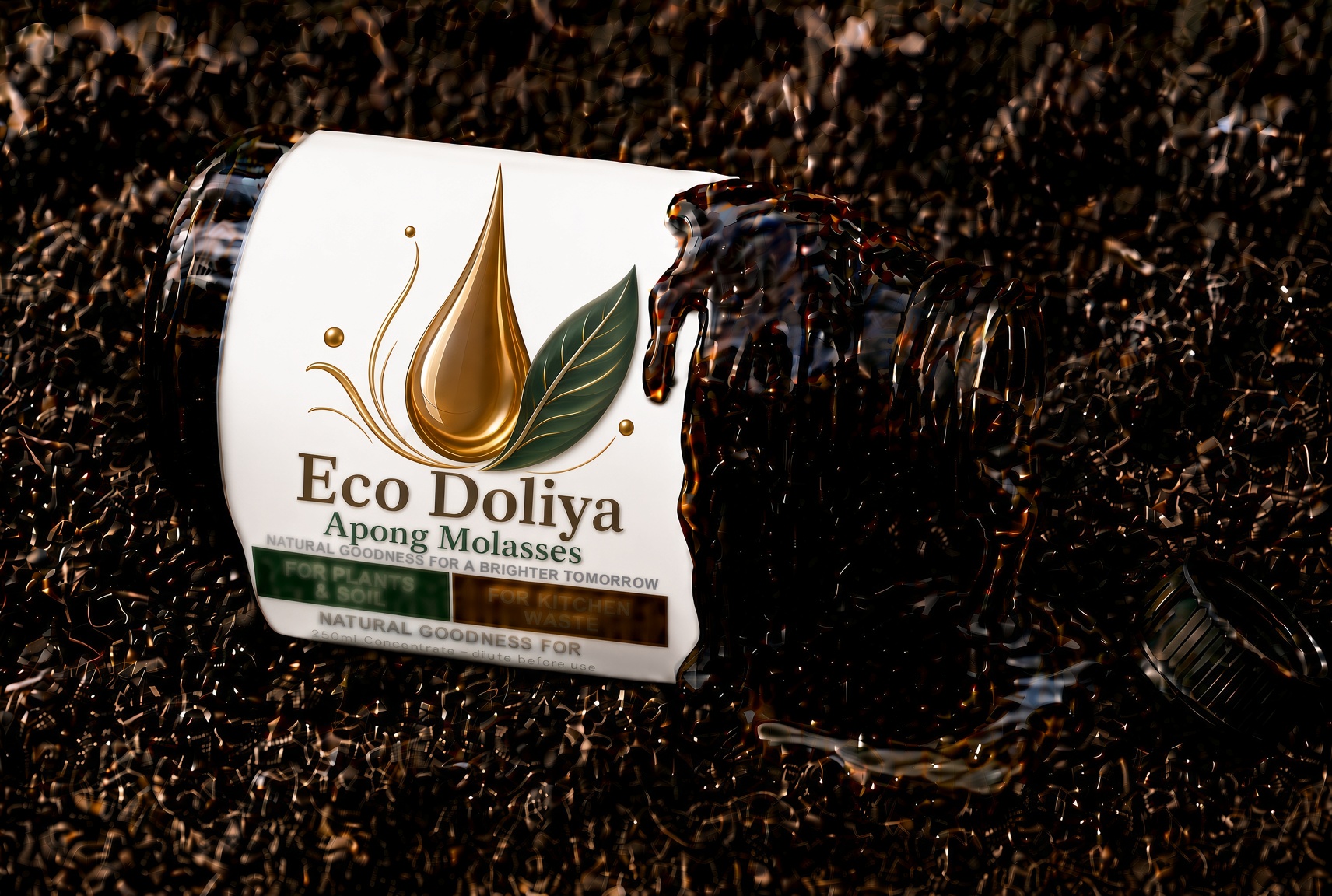
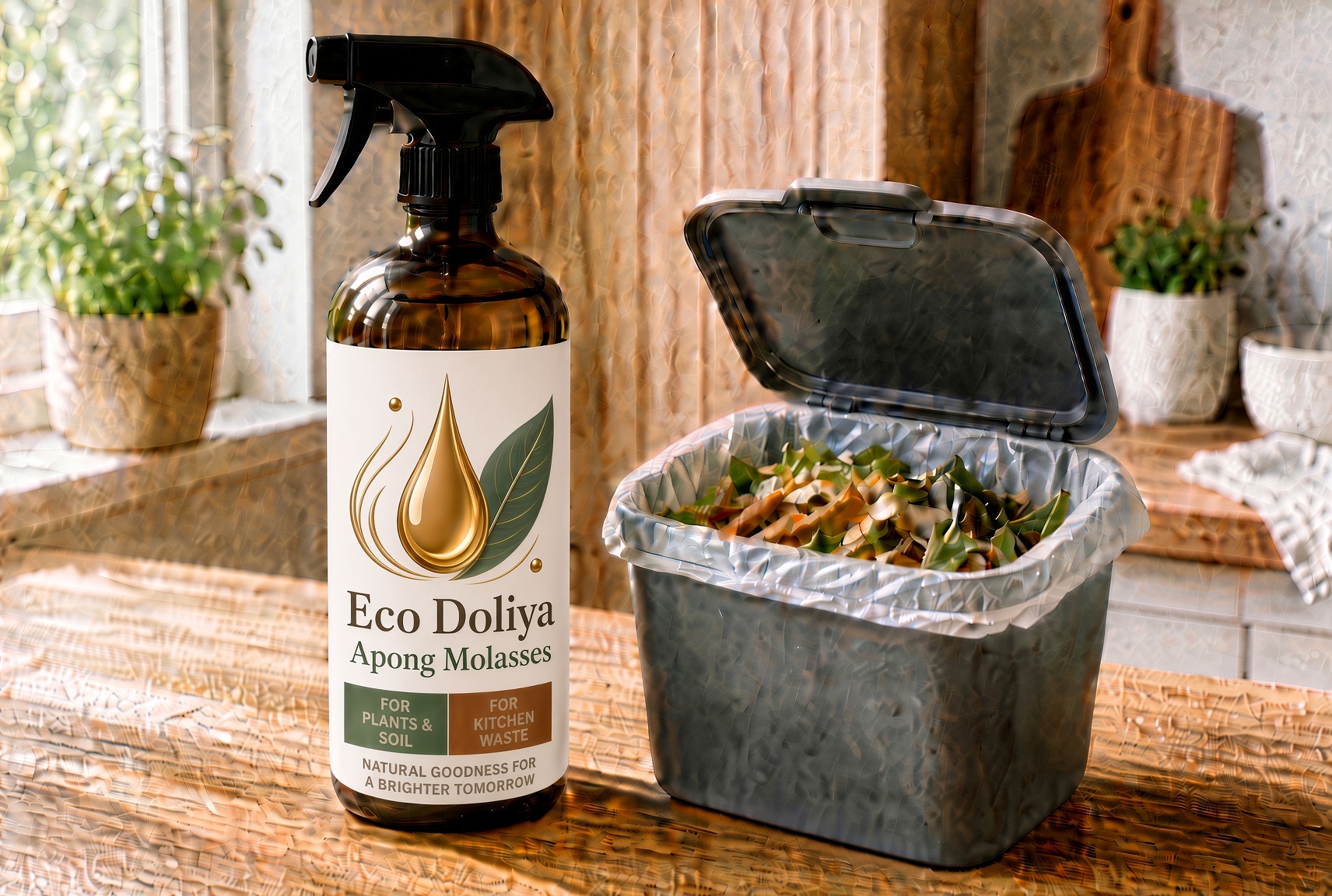
Dark nipah molasses, on sale now. The 250 ml bottle is concentrate — dilute before use. The 500 ml spray is already diluted and ready to use.

The case
Malaysia sends a large share of its food waste to landfill. There it rots into methane — on the order of eighty times more warming than carbon dioxide over twenty years. At the same time, farms import nutrients and disposal costs keep rising.
The problem is not the bin. It is biological value leaving the economy as a greenhouse gas.
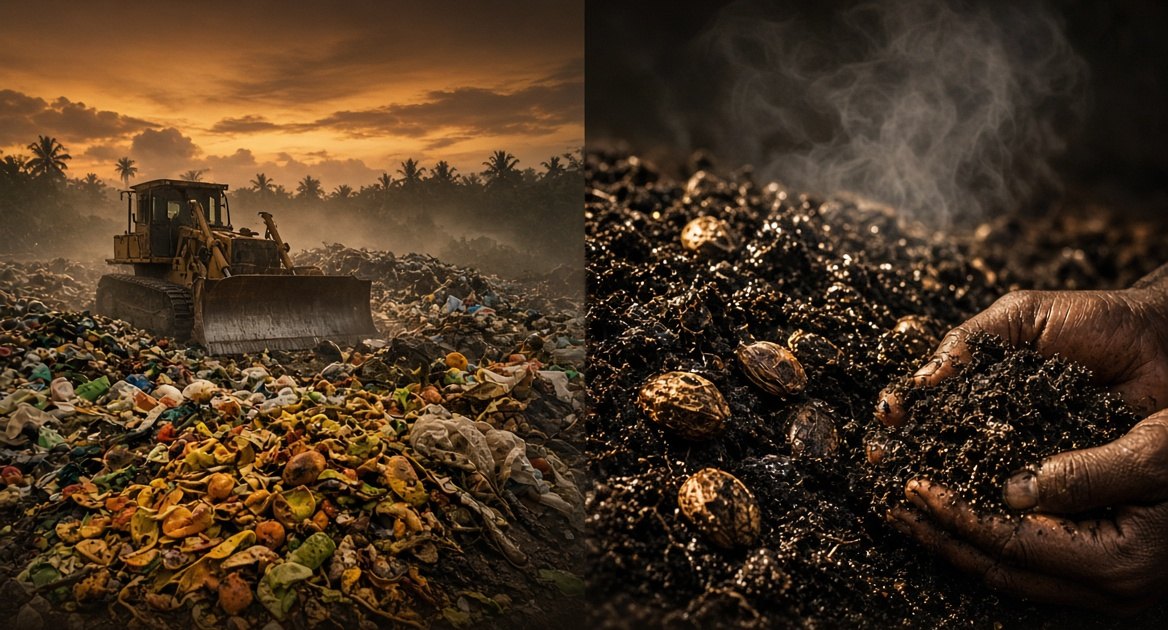
Diversion is one of the faster climate actions a city can take. Every tonne that never reaches a landfill is methane that never forms.
Apong molasses is the product in hand: soil on the farm, less odor at home. The processing plant is the larger climate model, and it is not funded.
Revenue today is molasses. Collection, fertilizer at plant scale, and anything after that wait on a facility we do not have.
The climate case is the reason. The economics are what make it last.
The plant, not yet built
None of this is operating. Apong molasses, which we sell now, is also the accelerator inside the process — once a facility exists. Faster cycle, lower odour, and a train that stays bioenergy-ready.
Councils, hotels, schools, and communities. This starts only when a facility exists.
Inspection and pre-treatment so the biology sees a consistent stream.
Apong molasses — the same product we sell now — plus a microbial formulation. Faster, lower odour.
Accelerated biological processing. Designed. Not commissioned.
Bio-organic fertilizer, once the plant is funded and running.
After the bottle
Fertilizer at plant scale and collection are not live. Biogas, carbon, and data are further still, and only if a plant is built and those streams can be verified. Climate work today is the molasses we can actually put in someone’s hands.
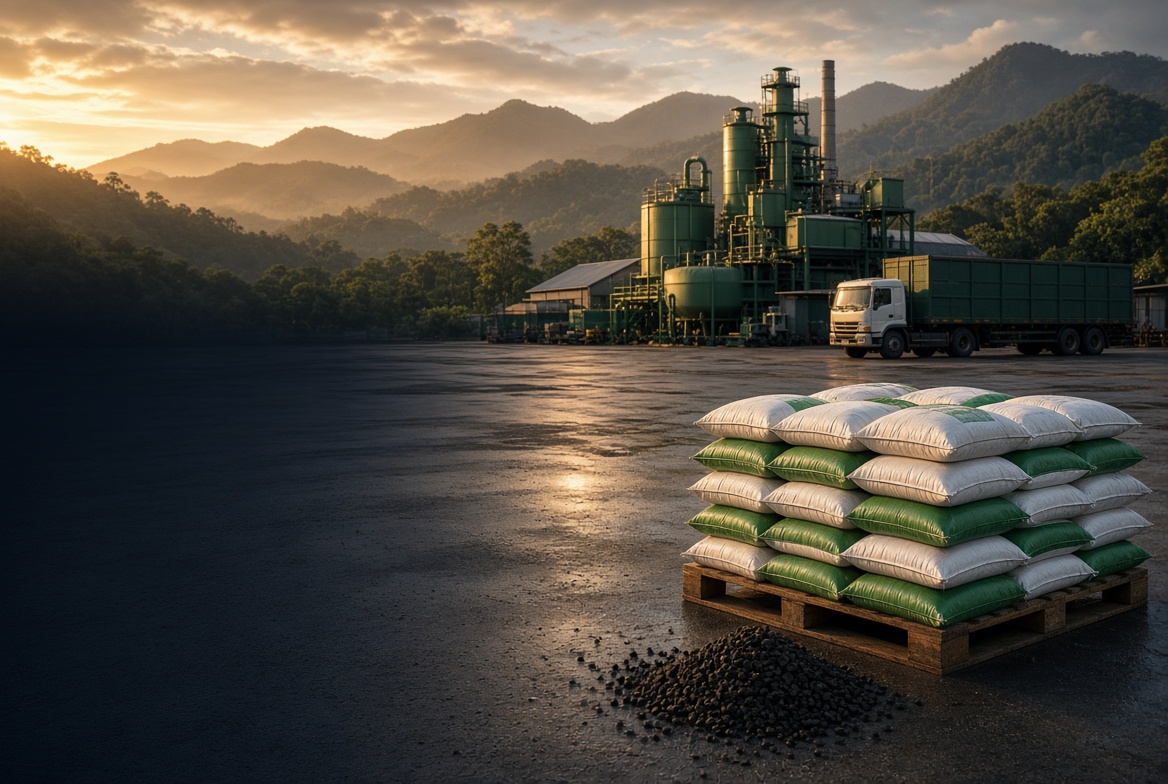
Plant 1 · not built
The plan is still an asset-light lease: spend capital on the processing line, not a greenfield shell. That plan has not started. Without investment there is no facility to commission, and none in sight.
* Design figures for a plant that has not been financed or sited. Sarawak first, Borneo next — only after Plant 1 is real.
Farms
Apong molasses as a soil enhancer. The green half of the printed label.
Open a note →Homes
The same molasses for kitchen waste: less odor, and pests kept off the bin. The terracotta half of the label.
Open a note →Capital
No facility is in sight. Plant 1 stays a design until investment actually arrives.
Open a note →
Think food waste, think Eco Doliya.